Cable Testing vs. Cable Certification: Why the Difference Matters More Than Ever
By Gordon White
A network is only as dependable as the cabling behind it. To ensure your infrastructure is truly sound, it is important to understand the different testing options available.
Cable testers are not created equal. To maximize your investment, ensure reliability, and prevent costly downtime, you must familiarize yourself with three key industry terms: Verification, Certification, and Qualification and know exactly when to deploy each.
Surprisingly, many organizations operate without a formal testing and maintenance plan. When something goes wrong, it leads to massive inefficiencies and troubleshooting headaches. Proactive testing and maintenance are paramount to achieving the uptime and seamless operation that modern networks demand.
Why Is This Becoming Important Now?
Today’s commercial offices rely heavily on Wi-Fi systems and IP security, while smart buildings continue to adopt a growing variety of IP sensors. The standard approach to powering these devices is Power over Ethernet (PoE). Modern networks are shifting from 2-pair PoE to standardized 4-pair PoE++, delivering between 60W to 90W of power.
This shift requires additional DC resistance testing across all four cable pairs. Only a certification tester can validate this resistance against international standards.
Decoding the Jargon: The 3 Levels of Cable Testing
1. Verification (Physical Continuity & Length)
Verification is the critical first step in any cabling installation. It is a fundamental check to trace links, measure length, and ensure each connection is wired identically end-to-end.
What it does: Instantly tests the wiremap to catch opens, shorts, miswires, and split pairs while measuring total cable length.
Why it matters: Provides a low-cost, high-speed method to verify the physical integrity of a cable link.
When to use it: Use during the “first fix” stage when pulling cables and adding connectors, or during daily troubleshooting when a single workstation loses connectivity.
2. Certification (Standards Compliance, Qualitative Troubleshooting & Warranty)
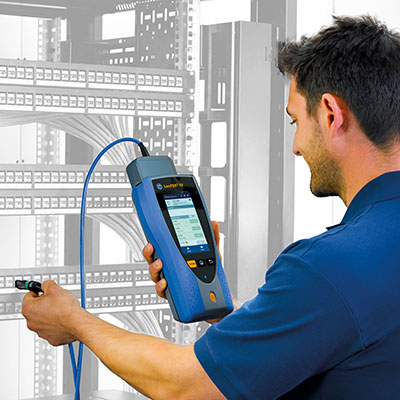
Certification is the only tier of testing that discovers poor connections or hidden cable damage during installation, or as an audit as a link ages. It uses electrical, frequency-based testing following official compliance guidelines used worldwide (such as TIA or ISO).
What it does: Evaluates the quality of connected components, measures DC resistance across all four pairs to guarantee PoE reliability and generates an unalterable pass/fail report.
Why it matters: It is the only tier that catches hidden cable damage or aging components, and it is required by manufacturers to secure long-term system warranties.
When to use it: Mandate certification for all brand-new cabling installations and new building handovers. Use it when troubleshooting persistent problem links, performing system audits before deploying faster technologies, or future-proofing aging sites.
3. Qualification (Application & Speed Capacity)
Commercial networks are built with expansion in mind, meaning not all outlets are activated on day one. While certification should be completed at initial installation, qualifiers bridge the gap by delivering important basic physical checks and IP network verification when a link goes live.
What it does: Tests whether an existing cable link can support specific network speeds (1, 2.5, 5, or 10 Gbps). On live links, it can also verify the IP connection and PoE power load.
Why it matters: After initial certification, qualification provides a fast, cost-effective way to verify that existing cabling will support a new device. It takes the guesswork out of bandwidth upgrades from 1 Gbps to 2.5, 5, or 10 Gbps.
When to use it: Use during everyday network expansions when activating dormant links or performing PoE load testing on live lines. (Note: If an intermittent problem persists after qualifying, run a full Certification test to pinpoint the issue).
Qualifiers are extremely versatile; every active network maintenance team should consider having one on hand.
How TREND Networks Helps
At TREND Networks, we develop testing and certification solutions that empower business performance. Our tools support cabling installers, contractors, network engineers, and IT teams to seamlessly install and maintain live networks.
Our solutions help professionals:
• Verify copper cabling installations and identify wiring/connectivity faults.
• Certify links against recognized cabling standards and produce clear, professional reports.
• Evaluate crucial PoE-related measurements and diagnose installation faults efficiently.
• Qualify cabling for higher-speed network applications while reducing troubleshooting and rework costs.
All our solutions connect via the TREND AnyWARE Cloud ecosystem, the most digitally advanced cloud system built to bring your team and data together, from Verifiers and Qualifiers to advanced Certifiers.
Whether you are installing a new structured cabling system, preparing for a network upgrade, or diagnosing an existing infrastructure problem, we have you covered with proof of performance for every test.
Need help choosing the right cable testing or certification solution? Contact TREND Networks today to find the ideal approach for your installation, maintenance, or troubleshooting requirements.